The Short Answer
Yes, in many cases you can place a mobile home on your land — but it depends on your county's zoning rules, the type of home you choose, and whether the property has access to utilities. Getting it right requires understanding a few key distinctions and following the proper permitting process.
Looking for a lot where a mobile home is already allowed? See our mobile home lots for sale in Florida — every one sits in a zoning district whose county code permits it, with owner financing and no credit check.
Placing a manufactured home on your own land is one of the most affordable paths to homeownership in the United States. According to HUD, manufactured homes cost roughly 50% less per square foot than traditional site-built homes — making them an appealing option for land buyers who want to live on their property without the cost of conventional construction.
Mobile Homes vs. Manufactured Homes vs. Modular Homes
Before diving into regulations, it is important to understand the differences between these three terms. They are often used interchangeably, but they have distinct legal definitions that affect what is allowed on your land.
Mobile Homes
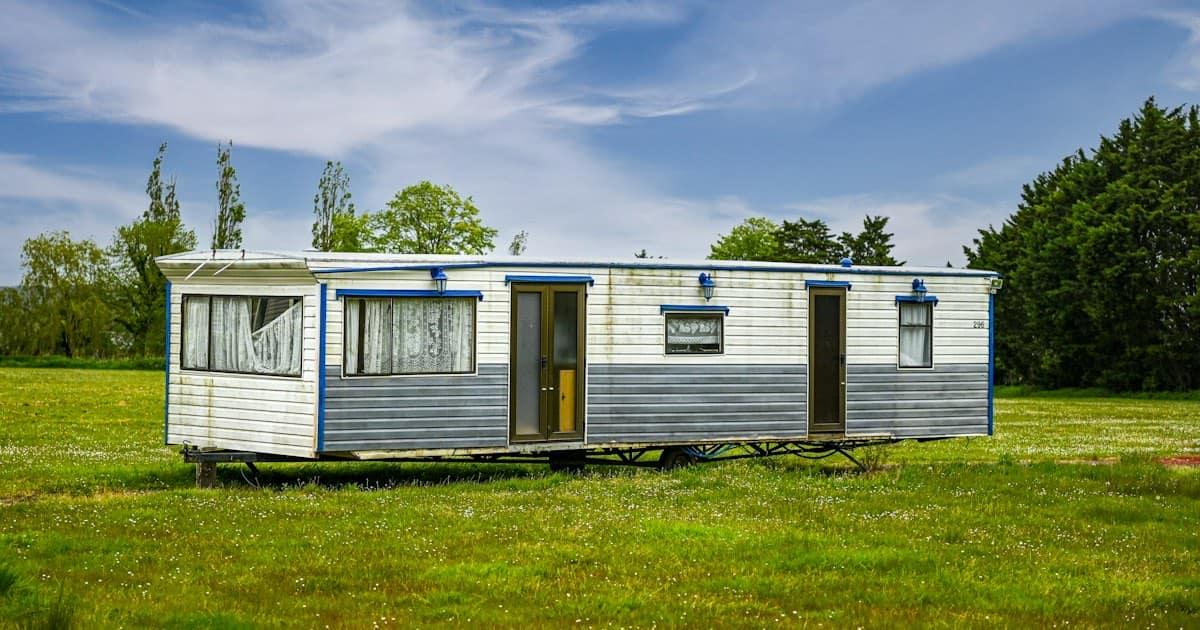
The term "mobile home" technically refers to factory-built homes constructed before June 15, 1976 — the date the HUD Code went into effect. These older homes were built to less stringent standards and are treated differently by many counties.
Some counties restrict or prohibit placing pre-1976 mobile homes due to safety concerns. Others allow them with additional inspections.
Manufactured Homes (HUD Code)
Manufactured homes are factory-built homes constructed after June 15, 1976 under the HUD Code (formally known as the National Manufactured Housing Construction and Safety Standards Act). The HUD Code sets federal standards for:
- Design and construction
- Structural integrity and durability
- Fire safety
- Energy efficiency
- Transportation to the home site
Every HUD-code home has a red certification label (sometimes called a "HUD tag") attached to its exterior, proving it meets federal standards. This label is critical — without it, a factory-built home may not be recognized as a manufactured home by your county.
Modular Homes
Modular homes are also factory-built, but they are constructed to state and local building codes (the same codes that govern site-built homes) rather than the HUD Code. They are delivered in sections and assembled on-site on a permanent foundation.
Because modular homes meet the same building codes as traditional homes, they are generally treated the same way under zoning rules. Most jurisdictions that allow site-built homes also allow modular homes.
| Feature | Mobile Home (Pre-1976) | Manufactured Home (HUD Code) | Modular Home |
|---|---|---|---|
| Build standard | Pre-HUD | HUD federal code | State/local building codes |
| Certification | None | HUD red label | State inspection label |
| Foundation | Often skirted only | Varies (piers, slab, or permanent) | Permanent foundation required |
| Zoning acceptance | Restricted in many areas | Accepted in most rural/RR zones | Accepted nearly everywhere |
| Financing options | Limited | FHA, VA, chattel, owner financing | Same as site-built homes |
| Average cost/sq ft | Lowest | $55 – $85 | $80 – $130 |
If you plan to place a factory-built home on your land, choosing a HUD-code manufactured home or a modular home will give you the fewest zoning headaches. Pre-1976 mobile homes face the most restrictions.
Zoning Requirements for Mobile and Manufactured Homes
Your county's zoning code is the first thing to check. Here is how different zoning types typically handle manufactured housing:
Agricultural (A/AG) Zones
Agricultural zoning is often the most permissive for manufactured homes. Many AG-zoned counties allow manufactured homes as primary residences on agricultural land with minimal restrictions. Some require:
- The home to be placed on a permanent foundation
- Minimum square footage (often 600 to 1,000 sq ft)
- Compliance with setback requirements
Rural Residential (RR) Zones
Rural residential zoning frequently allows manufactured homes, though there may be additional requirements such as:
- HUD certification (no pre-1976 homes)
- Permanent foundation
- Skirting that matches the home's exterior
- Minimum roof pitch or exterior appearance standards
Residential (R-1, R-2) Zones
Standard residential zones are where you will encounter the most restrictions. Some R-1 zones prohibit manufactured homes entirely, while others allow them only if they meet specific aesthetic or foundation requirements. Common conditions include:
- Must be placed on a permanent foundation (not a chassis)
- Must have a minimum width (often 20 feet or "double-wide")
- Must have a pitched roof (not flat)
- Must have exterior materials comparable to site-built homes
Deed Restrictions and HOAs
Even if your zoning allows manufactured homes, your property might have deed restrictions or HOA rules that prohibit them. Always check the deed and any covenants, conditions, and restrictions (CC&Rs) before buying land specifically for a manufactured home.
According to HUD, approximately 22 million Americans live in manufactured homes. These homes account for roughly 9% of all single-family housing starts in the United States, and the percentage is significantly higher in rural areas where land is more affordable.
The Permitting Process
Once you have confirmed that your zoning allows a manufactured home, you will need to obtain the right permits. While the process varies by county, here is the typical sequence:
Step 1: Contact Your County Building or Planning Department
Call the county and ask specifically about placing a manufactured home on your parcel. Provide the APN (Assessor's Parcel Number) so they can look up the zoning and any special conditions. Ask about:
- Zoning compatibility
- Required permits
- Foundation requirements
- Setback distances
- Any architectural standards
Step 2: Obtain a Building Permit
Most counties require a building permit for placing a manufactured home. The permit application typically requires:
- Site plan showing the home's location on the lot
- Foundation plan (engineer-stamped in many jurisdictions)
- Proof that the home meets HUD standards (the red label/data plate)
- Septic system plan or proof of sewer connection
- Well permit or proof of water connection
Step 3: Prepare the Site
Before the home arrives, you will need:
- Land clearing and grading — a level, compacted pad for the foundation
- Foundation construction — piers, slab, or basement per county requirements
- Utility connections — see below
- Driveway and access — the delivery truck needs road access wide enough for transport
Step 4: Home Delivery and Installation
The manufactured home is transported to your property and placed on the prepared foundation by a licensed installer. The county will inspect the installation to ensure it meets code.
Step 5: Final Inspections
After installation, the county conducts final inspections covering:
- Foundation and tie-down systems
- Electrical connections
- Plumbing connections
- HVAC systems
- Skirting and exterior completion
Once inspections pass, you receive your certificate of occupancy — and you are officially home.
Ready to Buy Land?
Browse available properties with owner financing. No credit check, no hidden fees.
See mobile home lots for saleUtility Hookups: What You Need to Know
Utilities are often the most overlooked aspect of placing a manufactured home on raw land. If your property does not already have utility connections, you will need to arrange them.
Water
- Municipal water: If the property is within a water district, you apply for a tap/connection. Fees typically range from $1,000 to $5,000.
- Well: If no municipal water is available, you will need to drill a well. Costs range from $3,000 to $15,000+ depending on depth and geology.
Sewer/Septic
- Municipal sewer: Connection fees typically range from $2,000 to $10,000.
- Septic system: If no sewer service exists, you will need a septic system. A standard septic system costs $5,000 to $15,000. A perc test (soil percolation test) must pass before the county will approve a septic permit.
Electricity
Contact the local electric utility company to arrange service. If the nearest power line is close to your property, connection may cost $1,000 to $3,000. If power lines must be extended a significant distance, costs can reach $10,000 or more.
Propane/Gas
Rural properties often use propane rather than natural gas. A propane tank and initial fill typically cost $500 to $2,000.
Always verify utility availability before purchasing land if your plan is to place a home on it. A beautiful, affordable parcel with no water access and no road frontage could cost tens of thousands of dollars in infrastructure before you can live on it.
Cost Breakdown: Placing a Manufactured Home on Your Land
Here is a realistic overview of what to budget beyond the home itself. Cost estimates are approximate ranges based on national averages and may vary significantly by region and market conditions. Obtain local quotes for accurate budgeting.
| Expense | Typical Cost Range |
|---|---|
| Land purchase (owner-financed down payment) | $2,000 – $10,000 |
| Manufactured home (new, single-wide) | $40,000 – $80,000 |
| Manufactured home (new, double-wide) | $80,000 – $150,000 |
| Foundation/site prep | $3,000 – $10,000 |
| Well (if needed) | $3,000 – $15,000 |
| Septic system (if needed) | $5,000 – $15,000 |
| Electric hookup | $1,000 – $10,000 |
| Permits and inspections | $500 – $3,000 |
| Transport and installation | $3,000 – $10,000 |
Total out-of-pocket costs beyond the home itself typically run $15,000 to $60,000 depending on how much infrastructure the land already has.
Tips for Buying Land for a Manufactured Home
If placing a manufactured home is your goal, keep these priorities in mind when shopping for land:
- Check zoning first. Confirm manufactured homes are allowed before anything else.
- Look for existing utilities. Land with water, sewer/septic, and electric access is significantly cheaper to develop.
- Verify road access. The delivery truck needs a clear path — check road width and any weight limits.
- Ask about soil conditions. Some soil types complicate foundations and septic systems.
- Check flood zones. Manufactured homes in flood zones face additional requirements and insurance costs.
- Review deed restrictions. HOAs and deed covenants can prohibit manufactured homes even when zoning allows them.
The Bottom Line
Placing a mobile or manufactured home on your own land is a practical, affordable way to achieve homeownership — but it requires planning. Check the zoning, understand the difference between HUD-code and modular homes, budget for utilities and permits, and work with your county building department to ensure a smooth process.
At Terra Prime Lots, we include zoning information on every property listing so you can quickly assess whether a manufactured home is an option. Many of our rural and agricultural parcels are well-suited for manufactured housing. If you are looking for affordable land where you can place a home and start building your future, browse our available properties to find the right fit.
Sources & References
This article is for informational purposes only and does not constitute legal, financial, or tax advice. Laws, tax rates, and regulations vary by state and change over time. Terra Prime Lots is a land sales company, not a licensed legal, financial, or tax advisor. Consult qualified professionals before making real estate, investment, or tax decisions.
Related Articles

Understanding Flood Zones: What FEMA Maps Mean for Land Buyers
Learn how to read FEMA flood maps, understand Zone A, AE, X designations, and what flood zones mean for insurance costs, land value, and your purchase decision.
Read Article
Land Zoning Explained: Residential, Agricultural, and Mixed-Use
Understand land zoning codes, what each type allows, and how to check zoning before you buy. A plain-language guide for first-time land buyers.
Read Article
Buying Land in Marion County, FL: Complete 2026 Guide
Everything to know about buying vacant land in Marion County, FL — Ocala, taxes, zoning, flood zones, World Equestrian Center area, and how to make a smart purchase.
Read Article